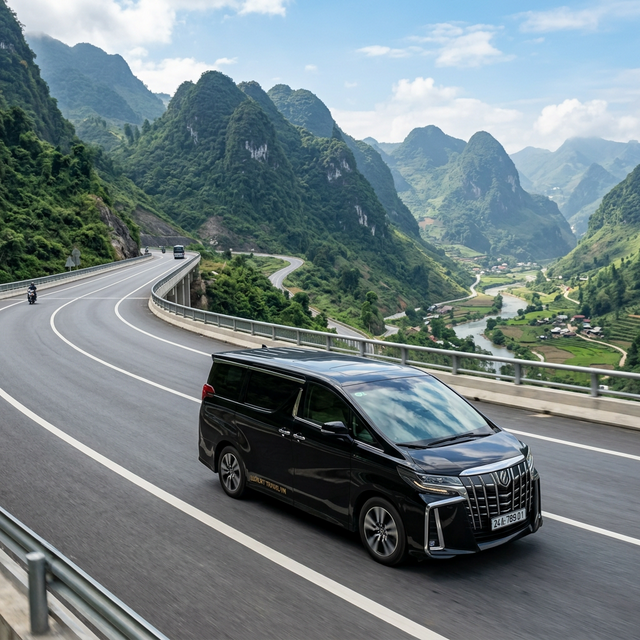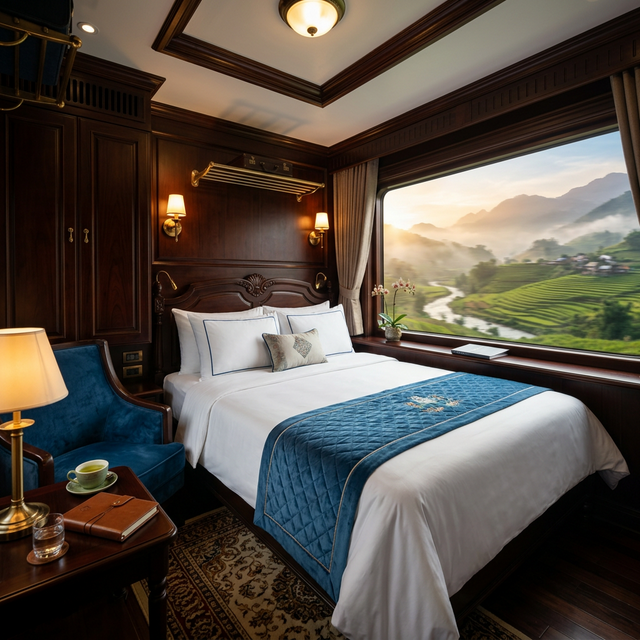
The Hanoi–Lao Cai night train is much more than just a means of transport. It's an elegant way to arrive in Sapa: you board in the evening in the capital and wake up in the mountains at dawn, with rice fields passing by your window. For twenty years, we've organized trips to Sapa — the train remains, for us, the most beautiful way to begin this journey.
How does the Hanoi–Sapa train work?
The train does not serve Sapa directly. It connects Hanoi Station to Lao Cai Station, 35 km from Sapa. Upon arrival, a local bus or taxi completes the journey to the town. Expect another 45 to 60 minutes.
Practical Information:
| Distance Hanoi–Lao Cai | ~296 km |
| Train Journey Duration | 7h30 to 8h30 |
| Departure Times | SP1: 21:35 / SP3: 22:00 |
| Arrival in Lao Cai | Between 5:30 and 6:30 AM |
| Lao Cai–Sapa Journey | 45–60 min by bus or taxi |
Which types of carriages to choose?
The Hanoi–Lao Cai train is operated by the national company Vietnam Railways, alongside about a dozen private operators offering superior comfort carriages. The two night trains (SP1 and SP3) carry both classic and private carriages attached to the same locomotive.
Vietnam Railways Classic Carriages
Basic but functional comfort. Cabins of 4 or 6 berths, air conditioning, linens provided. It's the most economical option.
| Class | Approx. Price |
|---|---|
| Air-conditioned Soft Seat | ~10 USD |
| 6-Berth Sleeper | ~14-18 USD |
| 4-Berth Sleeper | ~20-25 USD |
Private Wagons — Tourist Trains
Private operators offer significantly more comfortable carriages, with cabins of 2 or 4 berths, quality bedding, USB ports, hot water, and sometimes wifi. Prices vary by company.
| Company | Cabin | Approx. Price |
|---|---|---|
| Sapaly Express | 4 Berths | ~30-40 USD |
| Chapa Express | 4 Berths | ~35-45 USD |
| Fanxipan Express | 2 Berths | ~50-70 USD |
| VicSapa Train | 2 Berths | ~60-85 USD |
"For a couple or a family, a private 2-berth cabin in a tourist carriage offers significantly more comfort and privacy. For solo travelers or small groups on a budget, the classic or private 4-berth carriage remains a good compromise."
How to get to Sapa from Lao Cai Station?
Upon leaving the station, several options are available:
-
Public Bus: departs every hour from the stop located 300 m from the station. Cost is about 1.20 USD. This is the most economical option.
-
Hotel Bus: many accommodations in Sapa organize a transfer from Lao Cai. Inquire at booking.
-
Taxi: practical for families with luggage. Negotiate the price before getting in—expect between 8 and 15 USD depending on the vehicle.
Our advice: avoid touts who approach you as soon as you leave the platform. The public bus is reliable, inexpensive, and leaves at fixed times.
When and how to book your train ticket?
Hanoi–Lao Cai night trains sell out quickly, especially in October–November (golden rice season) and during Tết holidays. We recommend booking at least 2 to 3 weeks in advance during high season, and at least 1 week during low season.
You can book directly via private companies' websites or on platforms like Baolau or 12go.asia. If you're traveling with Parfum d'Autumn, we systematically include train ticket booking in our tour organization.
To compare all transport options to Sapa, consult our guide How to get to Sapa. And if the bus suits you better, discover our guide for going to Sapa by bus or private car.
FAQ — Hanoi-Sapa Train
Are there any day trains?
No. All Hanoi–Lao Cai trains are night trains, with departures between 21:30 and 22:40. To enjoy the scenery during the day, the limousine bus is the best option.
Can we travel with large luggage?
Yes. Cabins have storage spaces under the berths and overhead. Private carriages generally offer more space.
Is the train slower than the bus?
Yes — the total journey (train + bus Lao Cai-Sapa) takes about 9h30 compared to 5h30–6h by direct bus. But the train is more restful: you sleep during the journey and arrive fresh in the morning.
Is it better to take SP1 or SP3?
Both are night trains with similar schedules (21:35 and 22:00). SP3 carries carriages from several high-end private companies, including VicSapa. SP1 is slightly more economical.