Gastronomy
What to eat in Sapa?
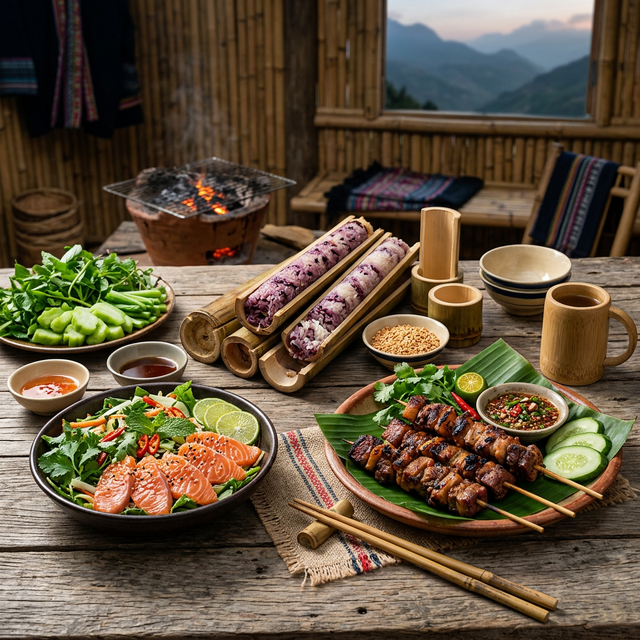
Ancestral flavors in the heart of the mountains — thang co, river salmon, night market BBQ and bamboo wine.
Ancestral flavors in the heart of the mountains — thang co, river salmon, night market BBQ and bamboo wine.
Sapa's table is a window onto its ethnic traditions: each dish tells a story, each flavor evokes a unique high-altitude terroir.
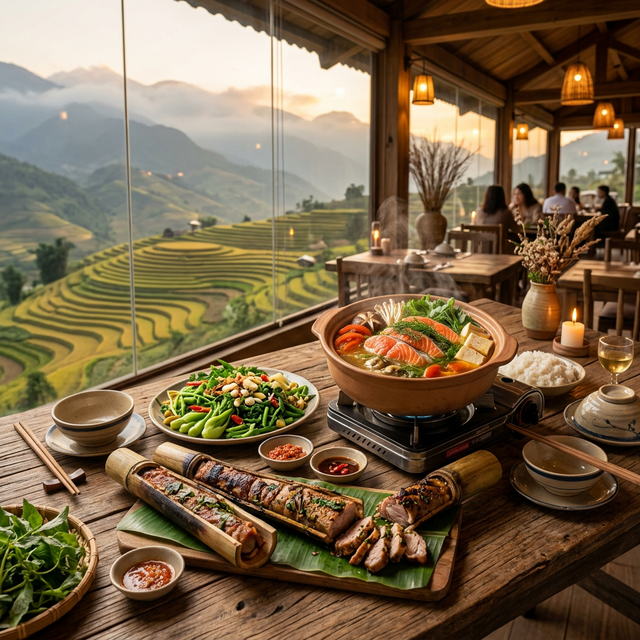
Night markets fragrant with grilled meats on bamboo embers, rustic restaurants serving thang co — the symbolic Hmong horse stew —, salmon and cold-water trout farms nestled in the Muong Hoa valley: Sapa's gastronomy surprises and enchants at every turn. Far from standardized tourist circuits, we guide you to the addresses and markets that make the region's culinary authenticity.
Sapa's cuisine is a unique blend of mountain influences and millenary ethnic traditions, where each dish tells the story of the high-altitude terroir.
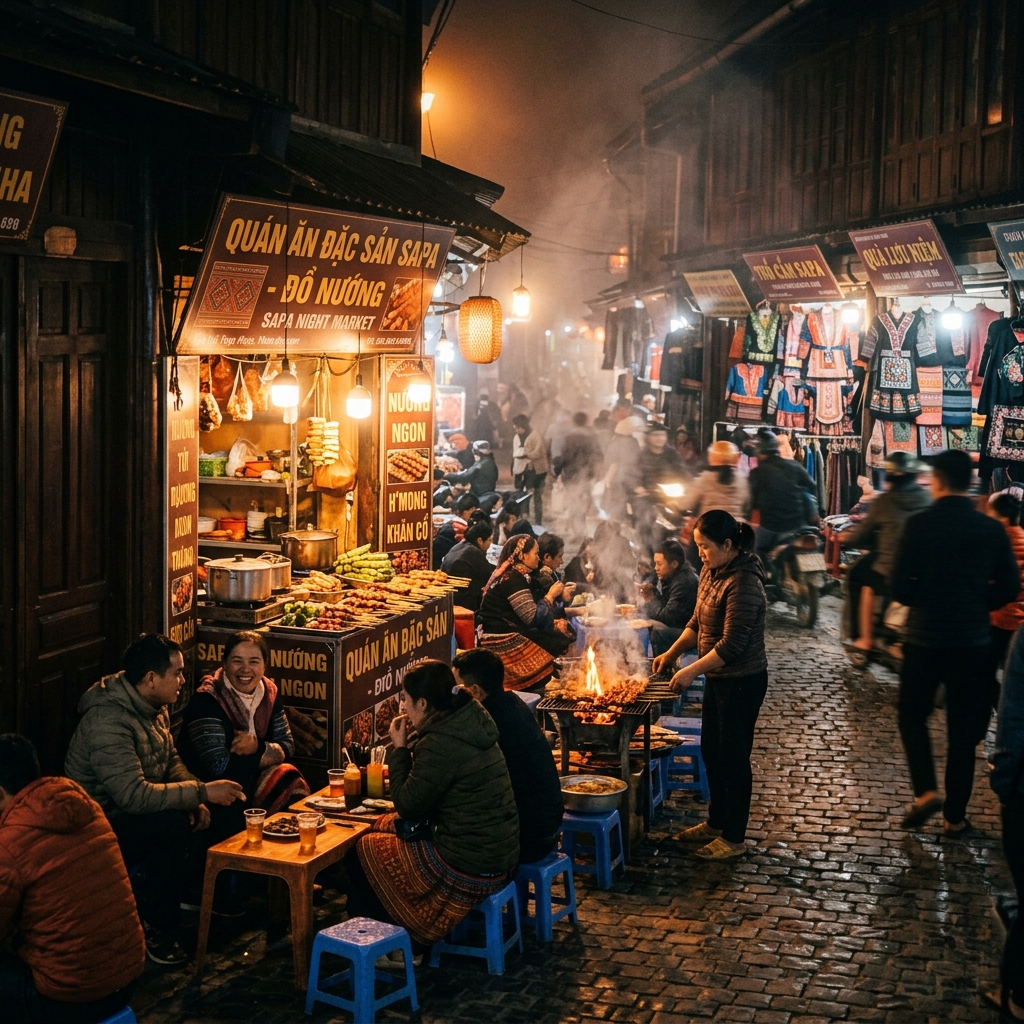
Your domain is that of ethnic markets and street food. You don't hesitate to sit on a small plastic stool to enjoy a bubbling Thang Co in Bac Ha or explore stalls drenched in the smoke of night market skewers.
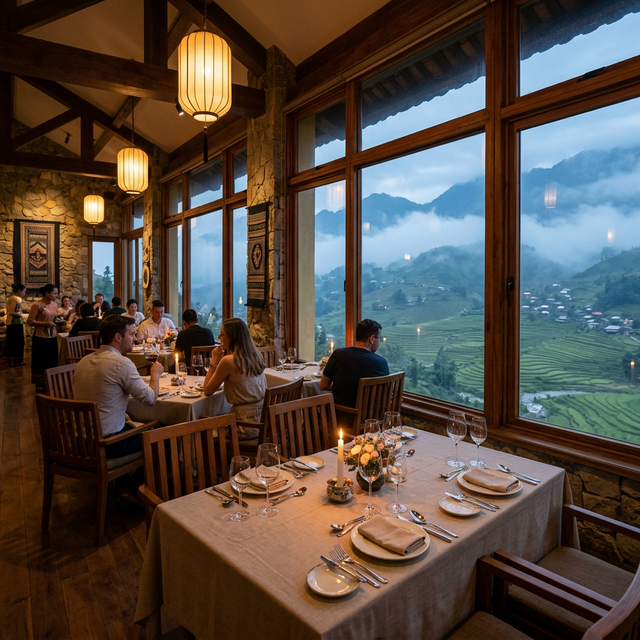
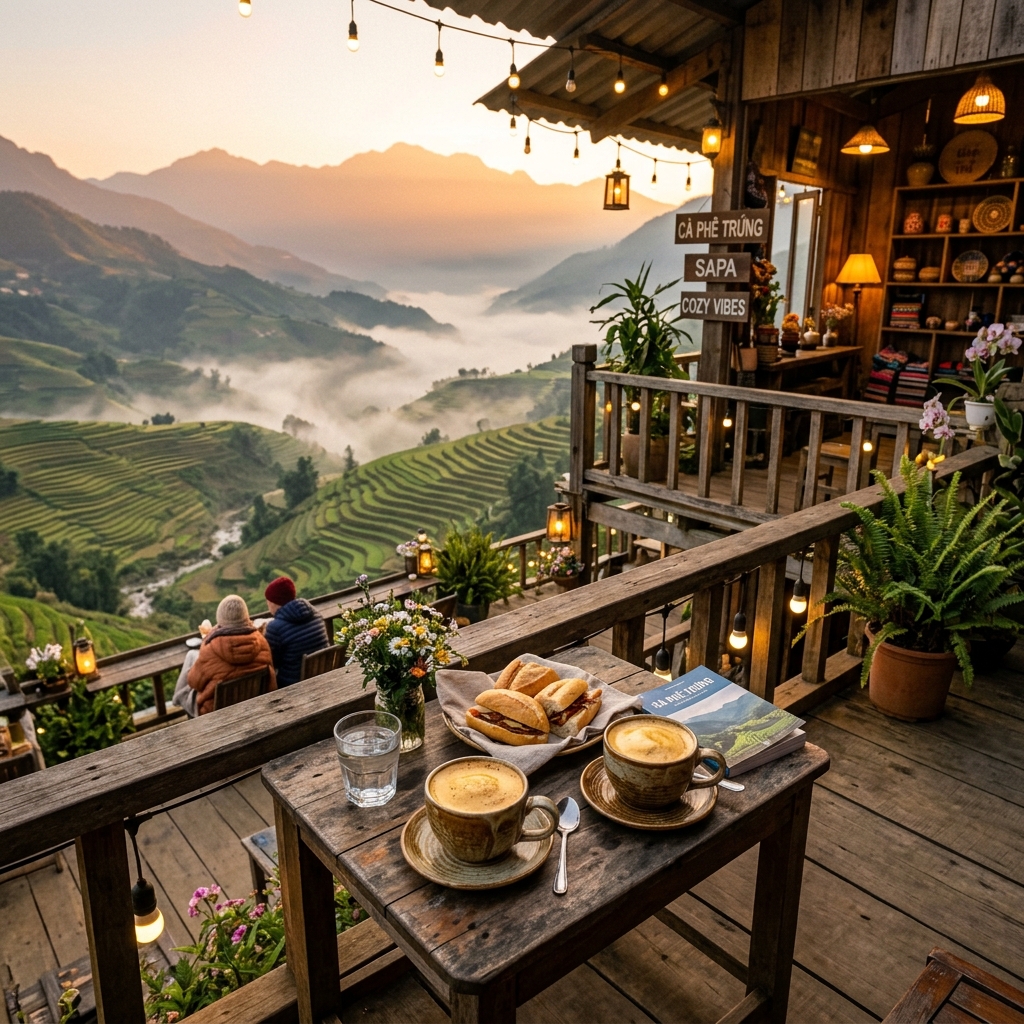
You prioritize panoramic restaurants. A dinner is only successful if accompanied by a view of the terraced rice fields of the Muong Hoa valley, with soft background music and attentive service.
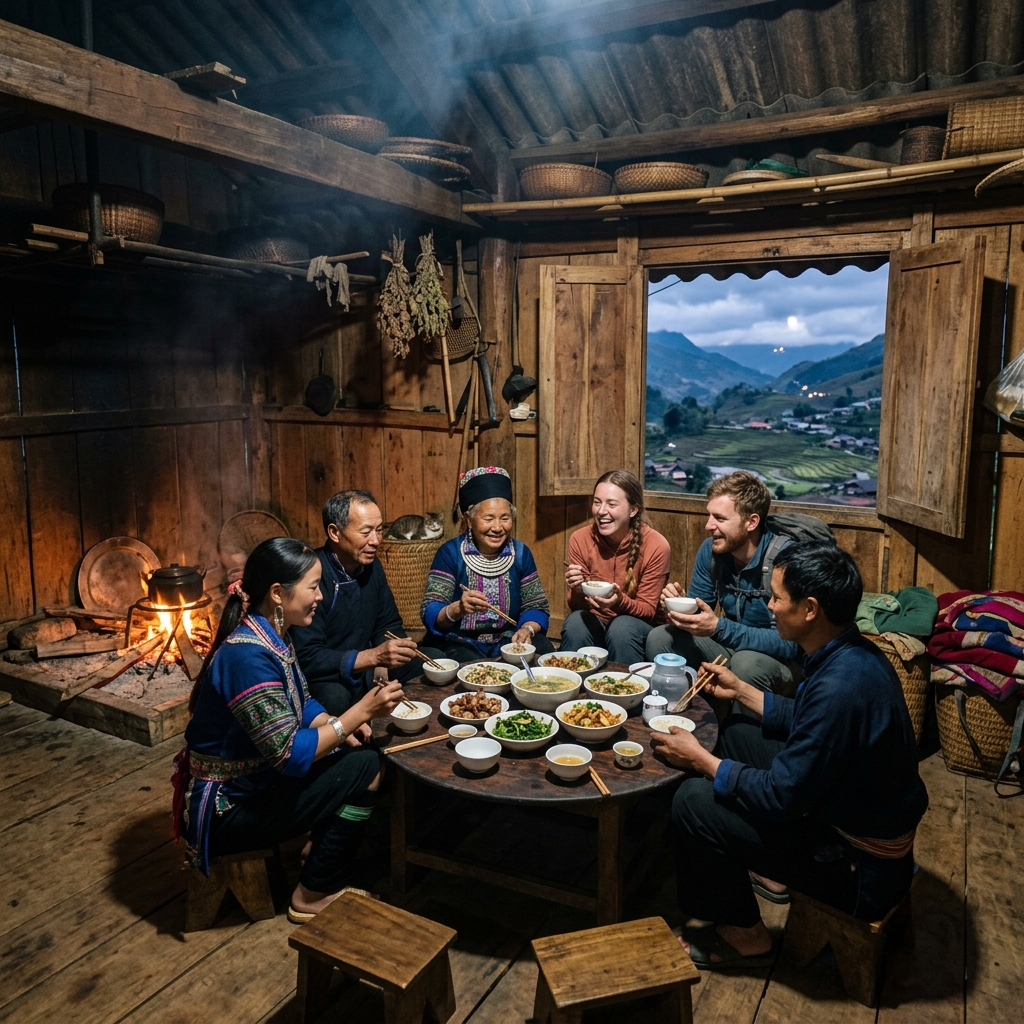
Nothing beats a meal with the locals. You seek the warmth of a wood fire in a traditional house, sharing family dishes and glasses of rice wine with your Hmong or Dao hosts until late at night.
The night market comes alive from 6:00 PM. Morning markets for soups (pho, bun) are most vibrant between 6:00 AM and 8:30 AM.
Street food in Sapa follows a precise rhythm. For early risers, the old market and small streets around the church offer the best hot soups to counter morning freshness. In the evening, however, all excitement centers around the central square and pedestrian streets.
Cau May Street is particularly renowned in the evening, but it is the night market (Chợ đêm Sapa) esplanade that groups the largest concentration of barbecue stalls (xiên nướng) where meat, vegetables, and roasted eggs are displayed on embers. Expect a smoky, noisy, and incredibly warm atmosphere.
Parfum d'Automne organizes tours including cooking classes, market visits, and meals with locals.
For over 15 years, our francophone local agency has been accompanying travelers in the authentic exploration of Vietnam.