Immersion Experience
Eating with Locals
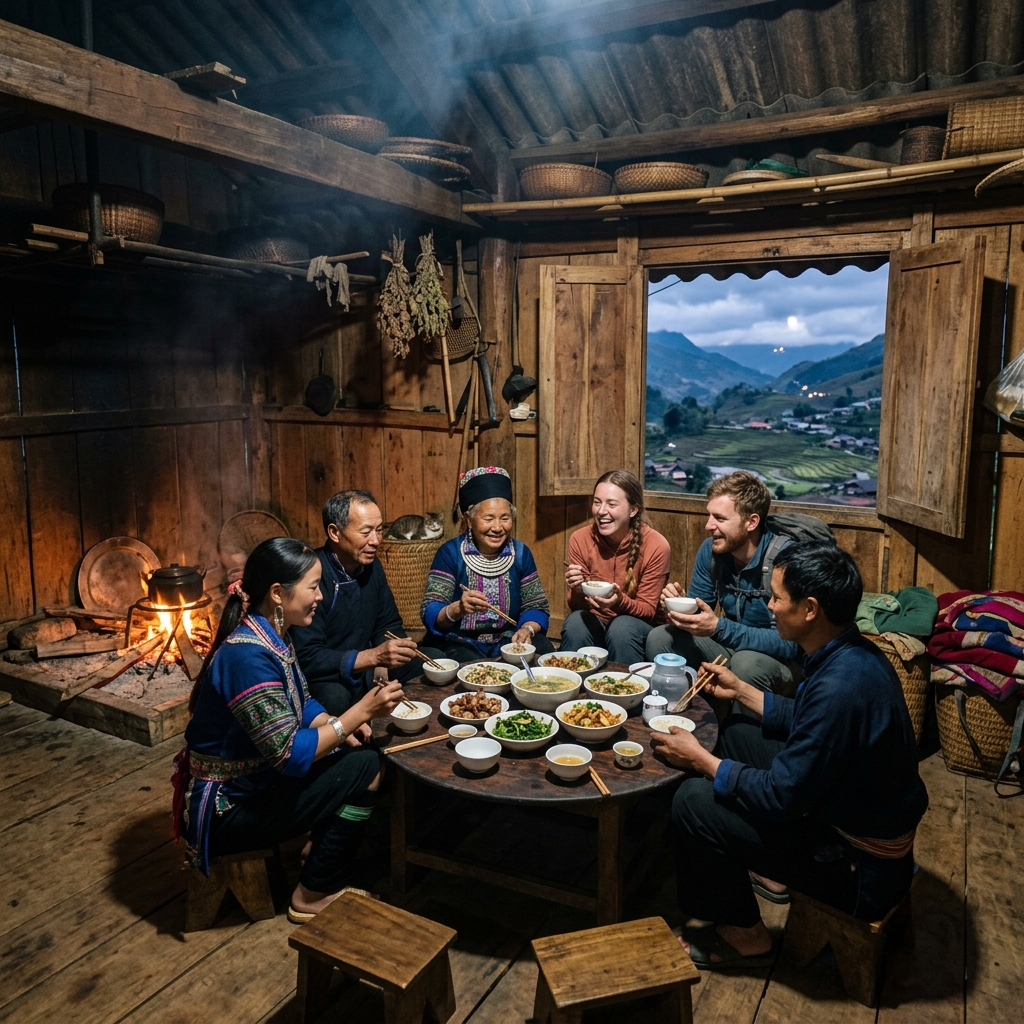
The moment when you're no longer a visitor, but a guest in the heart of the rice fields.
The moment when you're no longer a visitor, but a guest in the heart of the rice fields.
There are Sapa's restaurants — good, sometimes excellent. And then there's the table of a Hmong family in Lao Chai, a shared dinner in a wooden house amidst the rice fields, with dishes cooked using vegetables from the garden and meat from the animal raised in the yard. It's not comparable.
It's not the same experience, it's not the same relationship with time, it's not the same memory. Eating with locals in Sapa isn't just about food — it's a way to step inside. And it's often the moment of the stay that our travelers mention first when asked what touched them the most.
A homestay meal in Sapa is simple, generous mountain cuisine deeply rooted in the local terroir. Ingredients come from the garden, the forest, and village markets — nothing processed, nothing imported.

The food is simple — but what makes these meals unforgettable is rarely the dish itself. It's everything around it.
The grandmother gathering vegetables from the garden an hour before dinner. The mother preparing rice while singing softly. The father pulling a bottle of corn wine from the cupboard and pouring you a glass while looking you in the eye — a gesture of pure hospitality.
Join the cooking: Many families offer the chance to participate in preparation: cutting vegetables, rolling a banana leaf... These shared moments don't need a translator.
Lao Chai, Ta Van, Cat Cat
The most rustic. Pork is omnipresent, smoked or grilled. Meals start quietly, then become very warm.
Signature Dish: Pork sautéed with fresh ginger
Ta Phin, Giang Ta Chai
More fragrant and vegetable-based. Medicinal herbs and wild mushrooms are central. More formal.
Signature Dish: Wild mushroom broth
Ta Van
Legendary hospitality. Varied and colorful table. More river fish and elaborate sauces.
Signature Dish: River fish hotpot
Ban Ho
Off the beaten path. Ash-cured sticky rice and smoked buffalo in stilt houses. Characterful cuisine.
Signature Dish: Smoked buffalo (trau gac bep)
Simple formula: Book your night, and meals are offered at a fixed price. Expect 15 to 35 USD per night, meals included or an extra 50-100k VND.
Deeper intimacy: Dine in your guide's own family. This is what we organize for our travelers on tailor-made tours.
Possible through meeting on the trail or a smile on a doorstep. Unpredictable but beautiful if you have time.

Among the Red Dao of Ta Phin, the meal often extends into an ancestral therapeutic immersion.
In a wooden tub filled with steaming water, a hundred medicinal plants macerate: ginger, lemongrass, artemisia, local herbs... The steam rises, muscles relax. It's the ultimate mountain relaxation experience.
Indicative price: 8 to 15 USD per bath.