Mountain Cuisine
Specialties & Typical Dishes
From ancestral Hmong stew to treasures grilled over a wood fire.
From ancestral Hmong stew to treasures grilled over a wood fire.
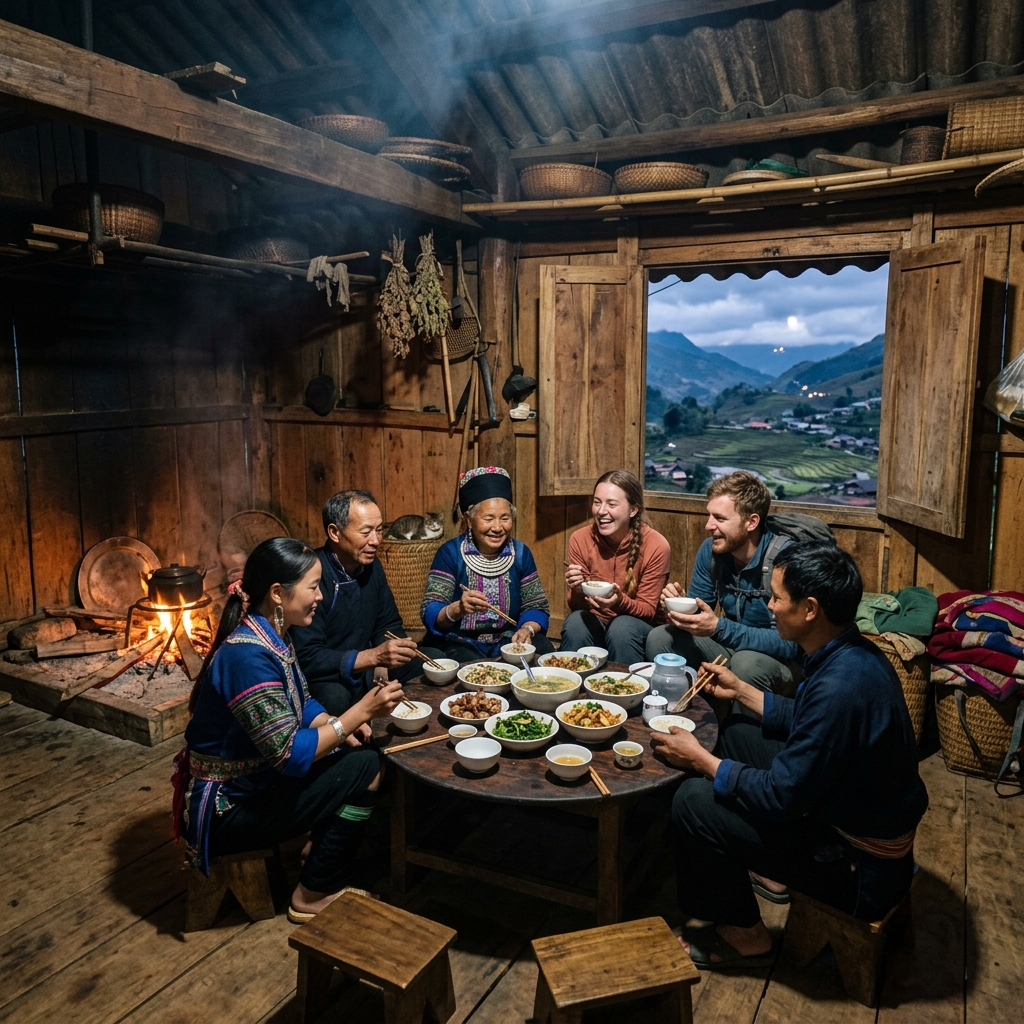
Sapa's cuisine is unlike any other in Vietnam. At 1,500 meters altitude, in a cool and misty climate, each ethnic group — Black Hmong, Red Dao, Giáy, Tay, Xa Phó — has developed its own preservation, cooking, and seasoning techniques.
The result is a mountain gastronomy that is both rustic and surprising, built around wood fires, wild herbs, local vegetables, and free-range animals. Here are the dishes we recommend to all our travelers — from the most accessible to the most exotic.
The essential specialties of Sapa are thang co, grilled black pork, com lam, mountain salmon and trout, black chicken with honey, and seven-colored sticky rice.
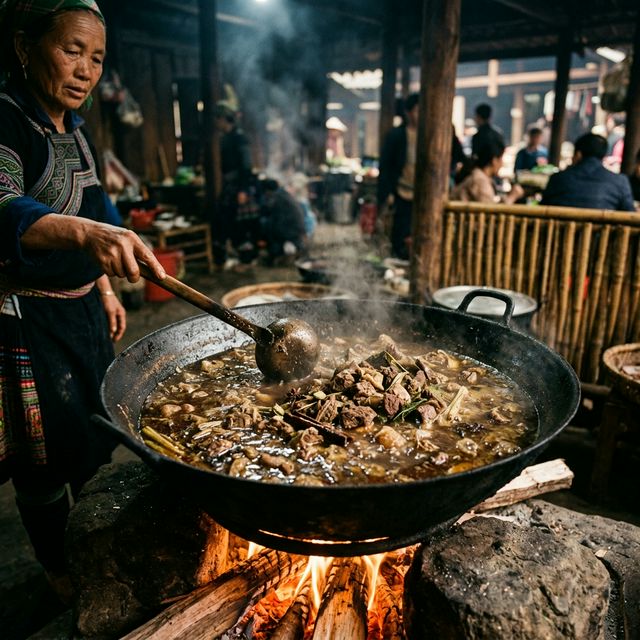
Thang co is a simmered soup that dates back over 200 years in Hmong culinary tradition. Prepared from horse meat — bones, organs, and entrails — it is slowly cooked with twelve mountain spices: cardamom, cinnamon, ginger, star anise, among others.
Where to taste it? A Quynh Restaurant in Sapa or at Bac Ha and Sapa markets for a raw experience.
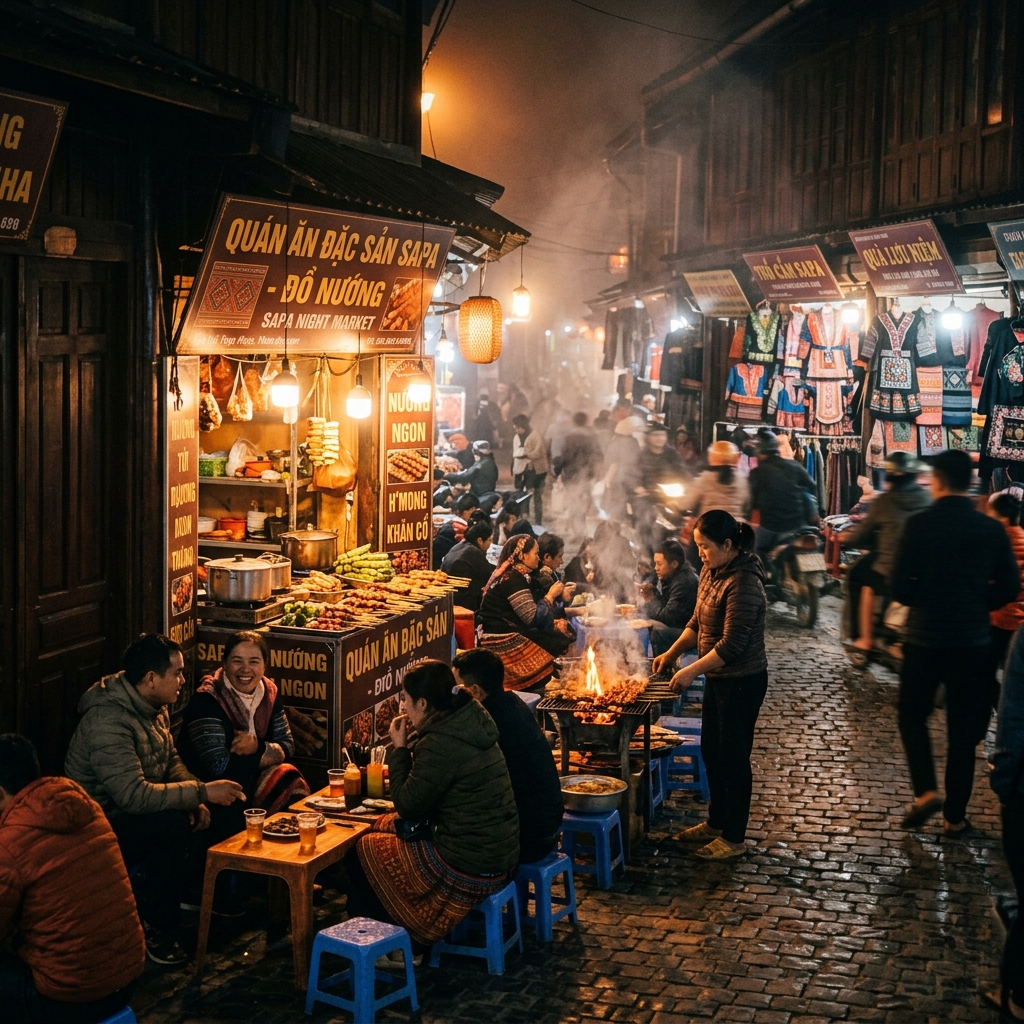
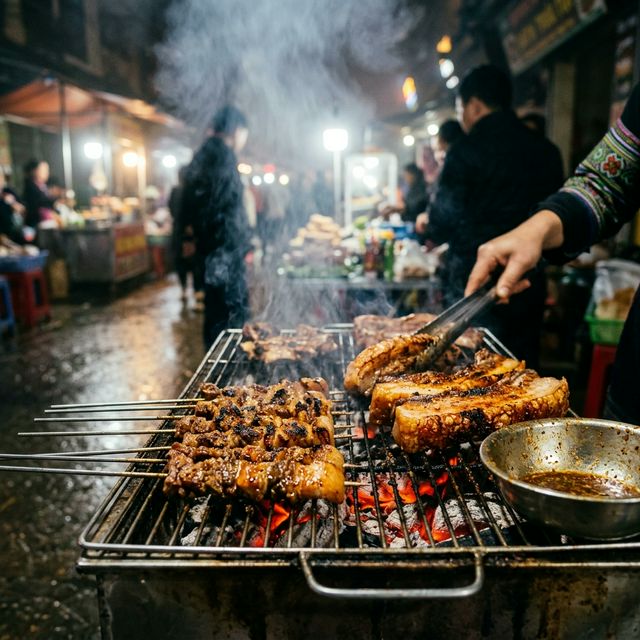
Sapa's black pork is a local breed raised in semi-freedom. Nicknamed "under-arm pig" because of its small size, it offers firm and fragrant meat. The piece is marinated in mountain herbs and grilled over a wood fire until the skin is crispy.
Insider's tip: Visit the grill street in the evening, where the pork is cooked in front of you on braziers amidst the mist.
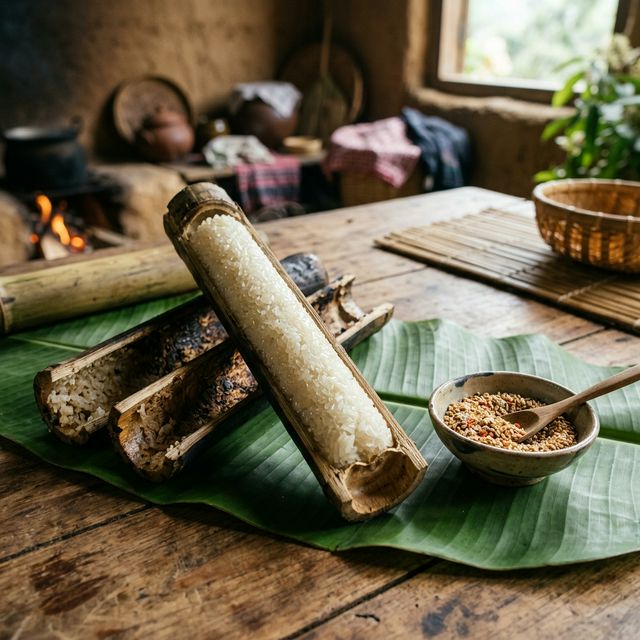
Sticky rice slipped into a fresh bamboo stem with stream water, then grilled over embers. The bamboo's natural steam infuses every grain with a unique woody and slightly sweet fragrance.
The perfect complement to accompany your grilled meat skewers during a hiking break.
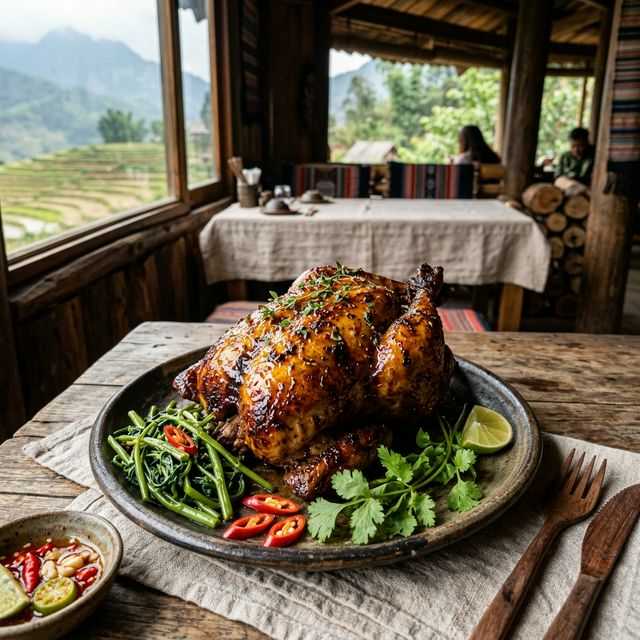
An exceptional specialty. Sapa's black chicken has naturally dark skin and bones, and very fine flesh. Brushed with wild forest honey and slowly grilled, it offers a unique crispy and melting contrast.
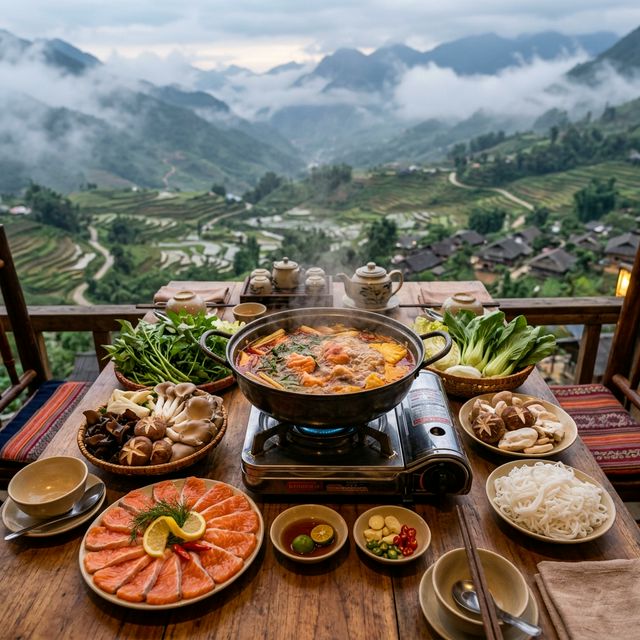
A surprise at this altitude! The pure mountain waters allow for delicate-tasting salmon and trout farming. Unmissable in a Hotpot (lẩu) for cool evenings, or as sashimi for a refined experience.
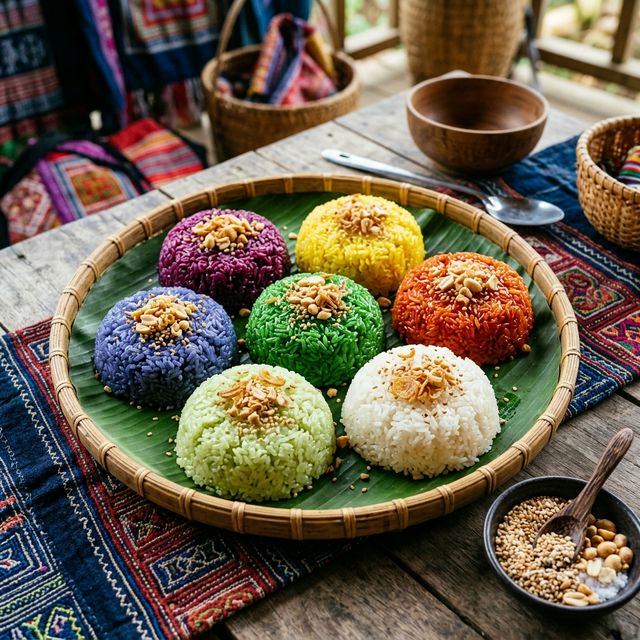
Xôi bảy màu rice is naturally dyed from forest leaves, turmeric, and plant ashes. No artificial colors are used; each shade evokes forest flavors. A festive dish that brings good luck.
Beyond the great classics, Sapa hides more confidential but equally striking specialties.
Meat marinated and then hung over the fire for weeks. Deeply smoked, ideal with a glass of rice wine.
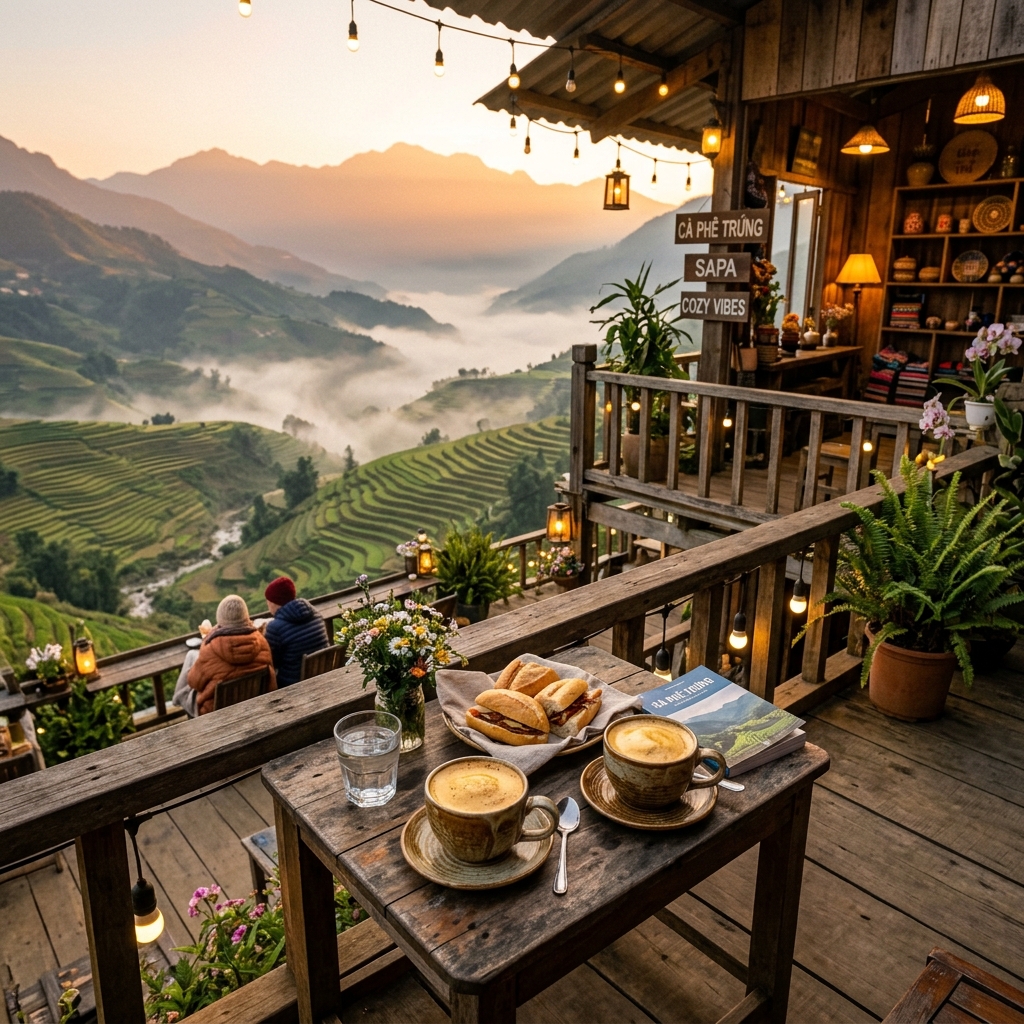
Sapa's version served "dry" with thick sauce, eggs, peanuts, and sweet potato chips. The perfect breakfast.
In Sapa, drinking is an act of sharing. Don't miss these drinks that rhythm local tables.
Honestly, it's not the most accessible dish — the smell is strong and the ingredients are out of the usual comfort zone. But many of our travelers who take the plunge come back conquered. Our advice: taste it first at the market, in small quantities, before ordering a full bowl at a restaurant.
In the grill street in the city center, every evening from 6 PM. It's the busy street around the central market — recognizable by the smell and smoke of braziers in the fog. No big signs, no translated menus — point to what attracts you and sit on the small chairs.
Early in the morning (6 AM–8 AM) at the central market for pho con sui and local breakfasts. Saturday mornings for Thang co at Sapa's ethnic market. In the evening for grills and salmon hotpot.
By eating local — neighborhood restaurant, street food, market — count 80,000 to 150,000 VND (3 to 6 €) per meal and per person. Salmon hotpot or a meal in a restaurant with a valley view goes up to 200,000–400,000 VND (8 to 16 €) per person.