Know-how & Medicine
The Dao of Sapa
Scarlet headdresses adorned with silver, reverse cross-stitch embroidery, and forest secrets — the most mysterious soul of northern Vietnam.
Scarlet headdresses adorned with silver, reverse cross-stitch embroidery, and forest secrets — the most mysterious soul of northern Vietnam.
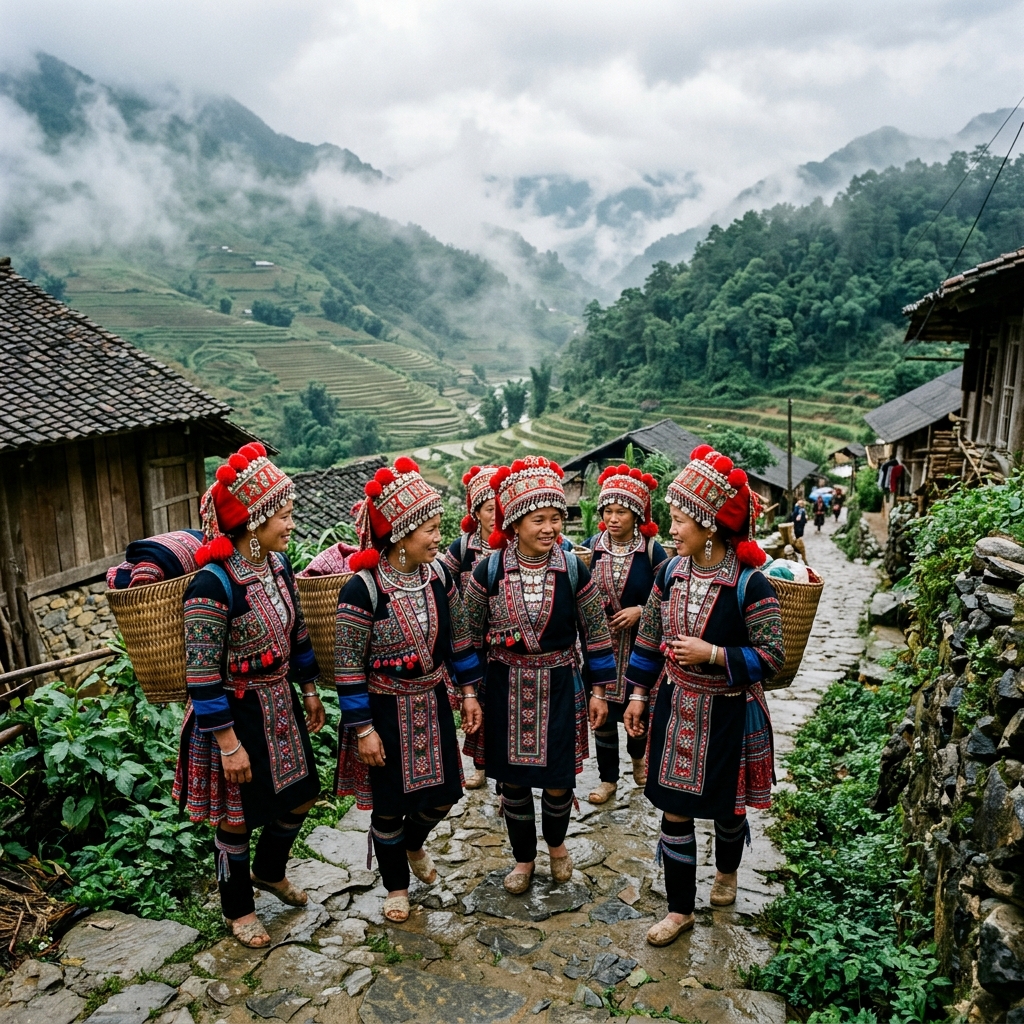
If the Hmong are the most visible face of Sapa, the Dao — and particularly the Red Dao — are its most mysterious soul. Their scarlet headdresses adorned with silver coins, their reverse cross-stitch embroidery of stunning precision, their plant medicine knowledge passed down through generations: the Dao form one of the richest and most complex cultures in northern Vietnam.
A culture that the curious traveler only brushes against while passing by, but which deserves careful attention.
The Dao — pronounced "Zao" in Vietnamese — belong to the large family of Yao people, present for millennia in southern China. Their migration to Vietnam occurred in several waves between the 13th and 19th centuries, following the same mountain routes as the Hmong, fleeing the pressures of successive Chinese dynasties.
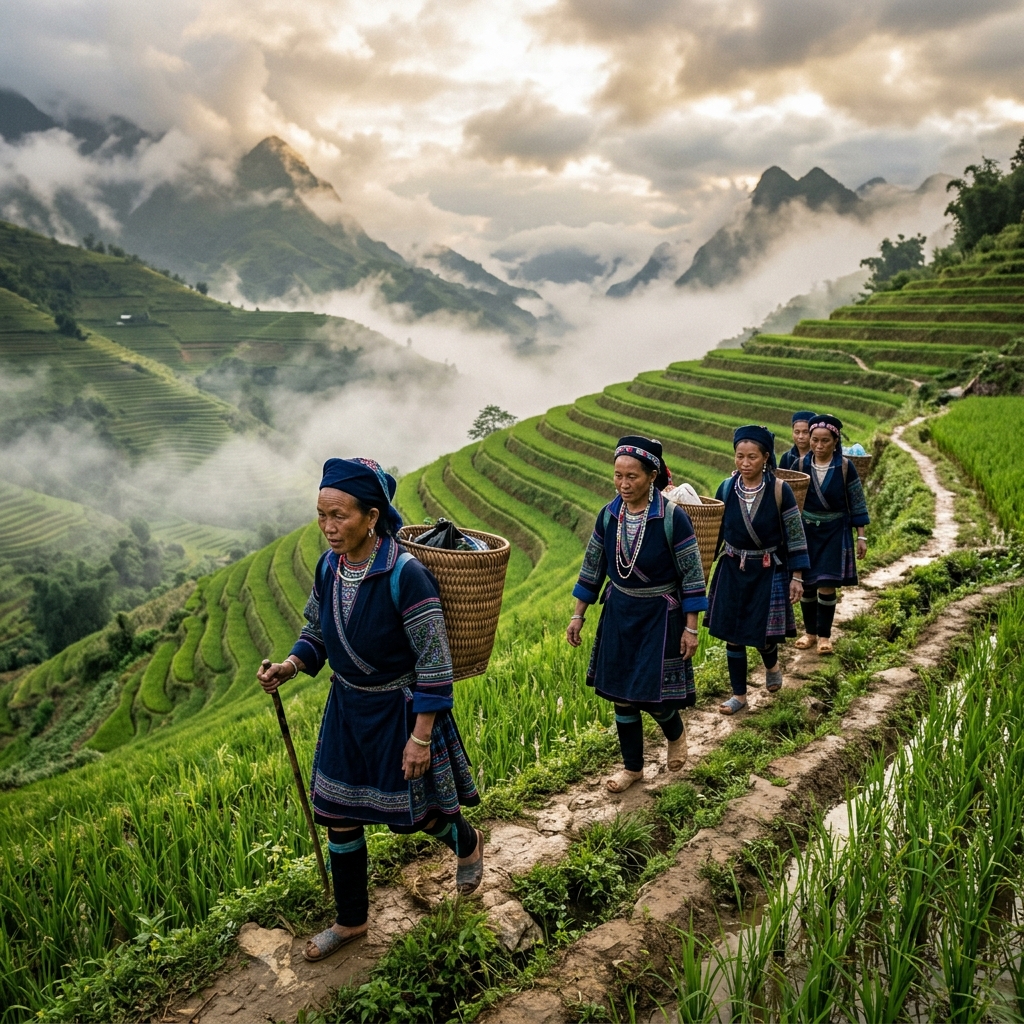
The Dao settled in a mountainous arc extending from Lào Cai and Hà Giang provinces in the west to Quảng Ninh in the east — a much wider geographical distribution than the Hmong. Around Sapa, it was primarily the Red Dao who established themselves, notably in the villages of Tả Phìn, Thanh Phú, and on the slopes of the Hoàng Liên Sơn massif.
Unlike the Hmong, who long resisted assimilation, the Dao developed their own written culture very early — Nôm Dao — adapted from Chinese characters and used to record their religious texts, genealogies, and medical knowledge. This literate tradition allowed them to preserve an exceptionally rich collective memory.
The Dao form an ethnic group united by language and major cultural structures, but divided into numerous sub-groups with distinct costumes and practices.
The most represented around Sapa. Their name comes from the female headdress — a bright red fabric turban or cap, embroidered and decorated with silver coins and scarlet pompons. The complete female costume is one of the most elaborate in Vietnam, with colorful thread embroidery on a black background covering the jacket, trousers, and leg wraps.
Wear outfits dominated by indigo and white, with more geometric embroideries. Found mainly in Lào Cai and Yên Bái provinces, outside the immediate Sapa zone.
Recognizable by the large number of metal coins sewn onto their headdress and clothing — a marker of wealth and status as much as a very particular decorative element.
Characterized by very tight female trousers embroidered with red and white floral patterns. Present mainly in Hà Giang and Tuyên Quang. Many other sub-groups — Dao Lô Gang and others — complete this mosaic.
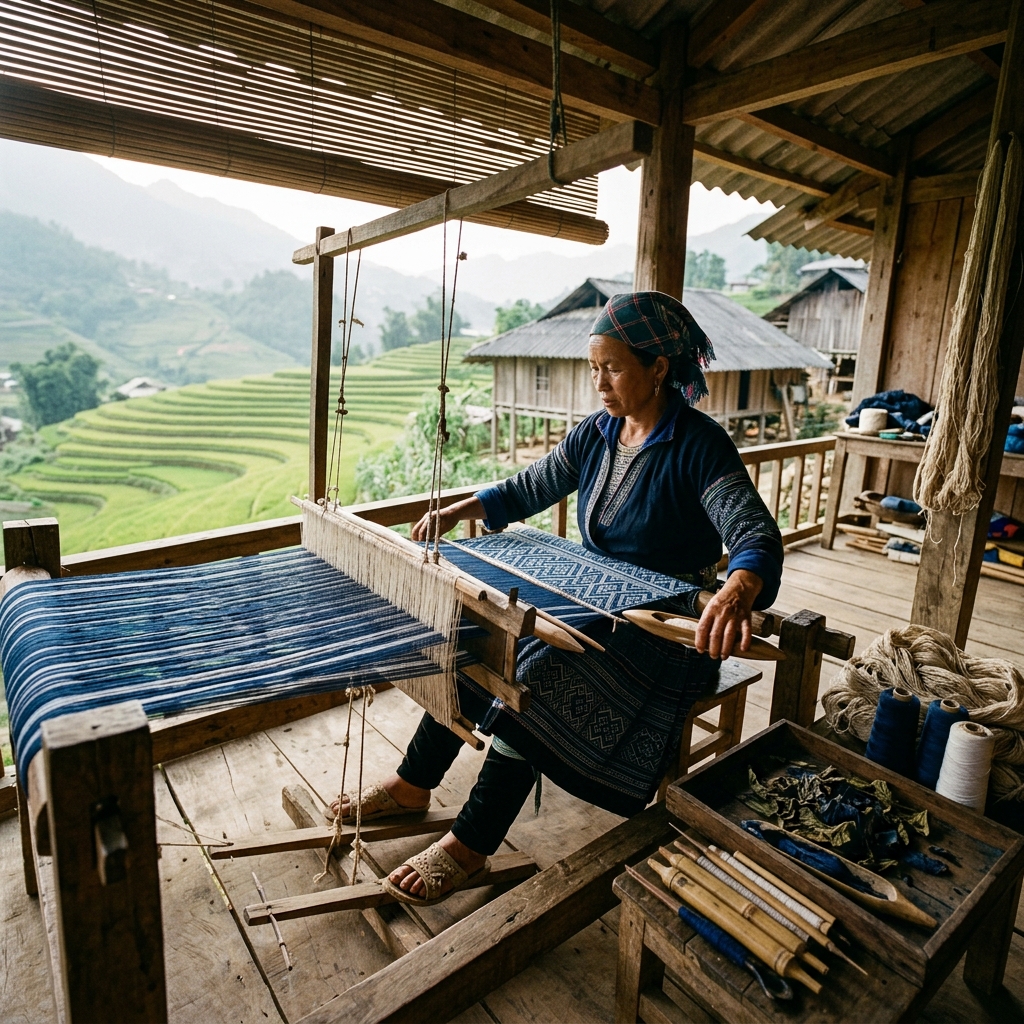
The textile craft of the Red Dao is one of the most sophisticated in all of Southeast Asia. Its primary technique — cross-stitching worked from the reverse side of the fabric, without a drawn pattern, from memory — is a feat that earns the admiration of specialists worldwide.
In practice, the Dao embroiderer works on the back of the cloth, guided only by her memory and the thread count of the weave. She only sees the final result — the right side of the fabric — by turning the work over. This technique, learned from childhood through observation and repetition, produces patterns of remarkable consistency and density.
The complete Red Dao costume cannot be bought or sold. It is a living work of art that each woman creates for herself over several years.
Some embroidered pieces are over a century old and are still worn with pride during ceremonies — testimony to an uninterrupted transmission.
One of the most remarkable specificities of the Red Dao is their deep knowledge of medicinal plants. This knowledge, passed down within families and clans over generations, constitutes a true pharmacological heritage now recognized by Vietnamese and international researchers.
The Dao identify and use several hundred medicinal plants gathered in the Hoàng Liên Sơn forests — roots, bark, leaves, flowers — to treat ailments as diverse as joint pain, digestive disorders, skin diseases, postpartum fatigue, or respiratory infections.
Some documented uses:
The best-known practice for travelers: a mixture of plants boiled for a long time in a large wooden tub, in which one soaks feet or the entire body. Formerly reserved for women after childbirth, this practice is now offered in many Sapa accommodations.
This medical knowledge is recorded in Nôm Dao manuscripts jealously guarded by families, some centuries old. Their transcription and preservation are subject to research programs supported by the Vietnamese State.
Dao spirituality is a complex syncretism that blends ancestral animism, Chinese Taoist influences, and purely Dao beliefs, built up over centuries of contact with Chinese civilization.
A pantheon populated by multiple deities — the Tam Thanh (Three Pures of Taoism), nature spirits, deified ancestors, village protective genies. Precise rituals address each of them according to circumstances: birth, marriage, illness, death, harvest, building a house.
The most important ritual ceremony in the Dao life cycle. A male initiation — comparable to an ordination — that confers on the man his adult status fully recognized by the community and the spirit world. The ceremony can last several days, presided over by a ritual master. A man without Cấp Sắc cannot join his ancestors after death.
The most spectacular collective celebration. For two days, men and women dance uninterruptedly in codified ritual dances, each with its precise movements and symbolic meaning. The dance chasses away evil spirits and calls for ancestors' blessings on the new year.
Dao society is patrilineal and organized around the family clan. Clan names — Bàn, Triệu, Lý, Phùng among the most common — determine ritual affiliation and matrimonial taboos: one cannot marry within the same clan.
The centerpiece of every Dao house, the altar is the object of daily care — incense, water and food offerings — and the place for all important family decisions.
Never photographed without permission and never touched by visitors — it is a sacred space whose respect is the first rule of etiquette in a Dao home.
The Red Dao of the Sapa region have often leveraged tourism in a more structured way than other ethnic groups. Embroidery workshops in Tả Phìn, where women work in groups and sell directly to visitors, constitute a model of artisanal value that truly benefits the producers.
Dao herbal baths have become a local industry in their own right, offered in establishments ranging from simple wooden tubs in locals' homes to high-end spas in Sapa's major hotels. This commercialization raises questions about authenticity and fair compensation for knowledge holders.
The preservation of the Nôm Dao language and writing is a shared concern for communities and researchers. The transmission of ritual knowledge is even more fragile — the number of masters capable of presiding over major ceremonies like Cấp Sắc is decreasing, and training new officiants is a major cultural challenge.
Prefer an herbal bath directly with a family in Tả Phìn rather than in a large city-center spa. Buy embroideries directly from artisans — and inquire about their authenticity. Always ask before photographing, especially altars and ceremonies.
The Dao are the 9th largest ethnic group in Vietnam with about 1.3 million people according to the 2019 census. They are present in about twenty provinces, from the Chinese border to the northeastern coastal provinces.
Despite superficial similarities — high altitude living, embroidered costumes, agricultural economy — Hmong and Dao are distinct groups with different languages, social structures, and spiritualities. The Dao have their own written tradition (Nôm Dao) which the Hmong did not develop comparably. The Dao are also generally considered culturally closer to China, due to Taoist influence in their spirituality.
Rarely and with difficulty. Cấp Sắc is a family and community ceremony, not open to foreigners in principle. Some very well-connected local Dao guides may, after a long stay and established trust, obtain an invitation. But this cannot be requested or bought.
The village of Tả Phìn is the most accessible and frequented, 17 km from Sapa. Weekend markets in Sapa also attract many Red Dao women in traditional costume. For a more authentic encounter, villages in the valley around Thanh Phú, less touristy, are worth a visit with a local guide.
Travelers' reports converge on the same observation: after a long day of trekking, the Dao herbal bath truly relieves legs and joints. Vietnamese pharmacological studies have confirmed the anti-inflammatory properties of several used plants. The most authentic experience remains that offered directly by Dao families in Tả Phìn, rather than in large hotel spas in Sapa.
We organize immersive days in Tả Phìn including visits to embroidery workshops, meeting artisans, and authentic Dao herbal baths — as part of our custom tours.