Ancestral Expertise
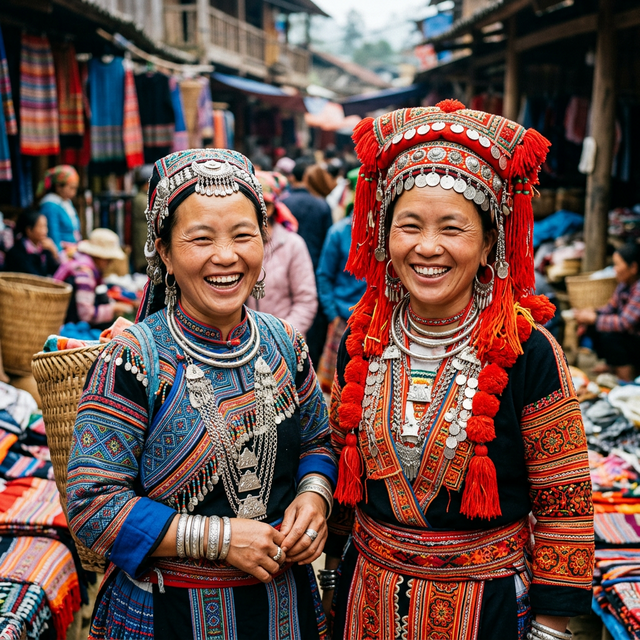
Craftsmanship in Sapa is not a performance for tourists. It is a living expertise, passed from mother to daughter, structuring the identity and social status of communities.
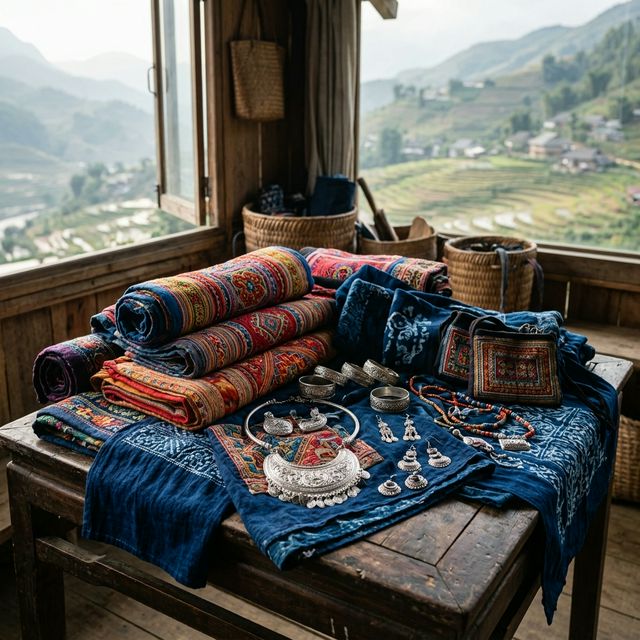
Every piece of embroidery, every hand-hammered jewel tells a story. Understanding the work behind these objects radically changes your stay experience. This guide reveals the secrets of the region's master artisans.
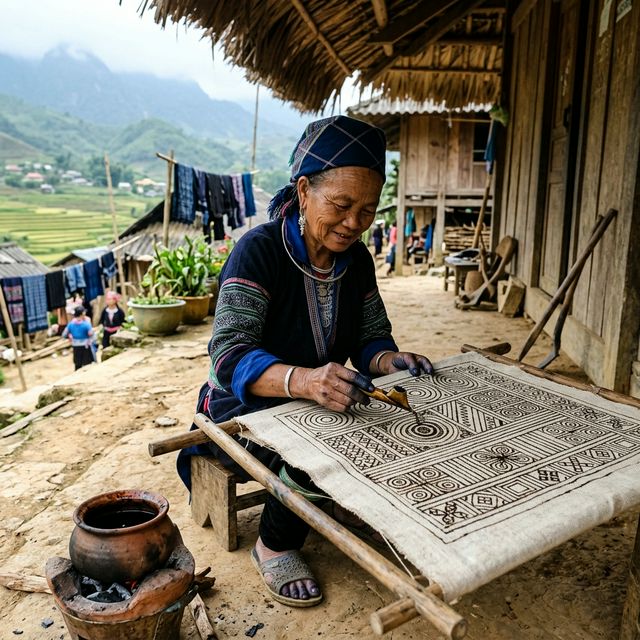
The process starts with hemp, hand-spun and woven. Patterns are applied with hot beeswax before repeated natural indigo baths.
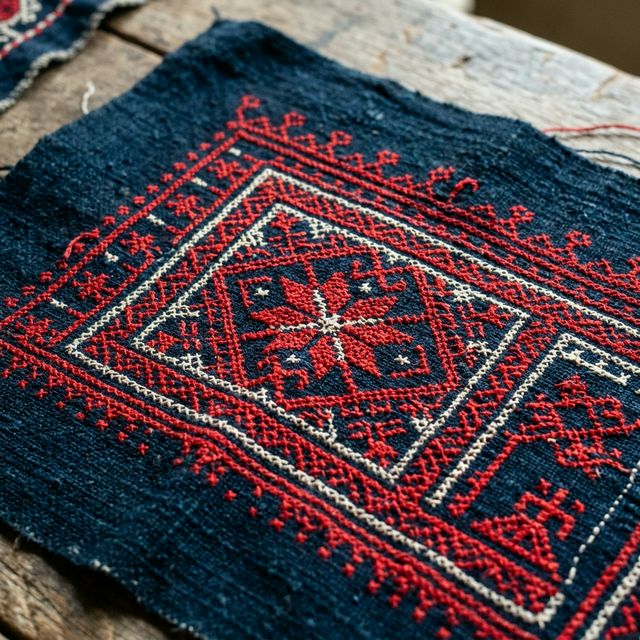
The Dao work from the reverse side, memorizing complex patterns without a guide. Mathematical precision for vibrant, symbolic colors.
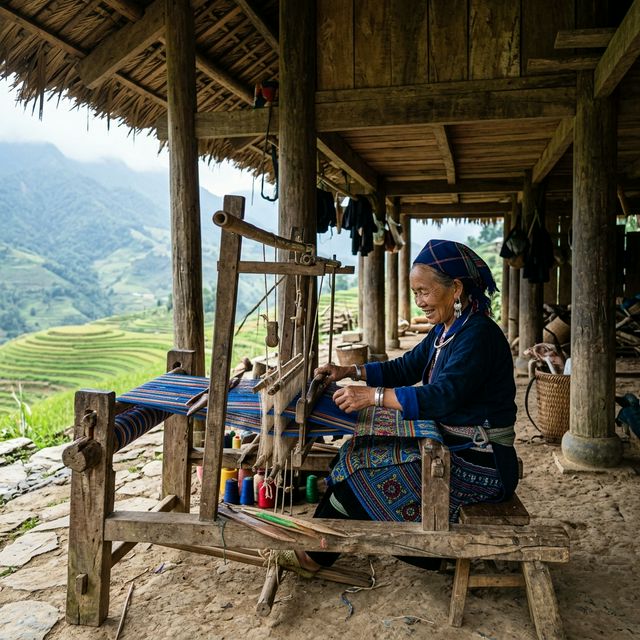
Geometric patterns are created directly on the traditional loom installed under stilt houses. Robust textiles in sober colors.
For the Dao and Hmong, silver materializes wealth and protects against spirits. Every torque (necklace), ring, or earring is hammered and engraved without a mold by specialized artisans.
The workshops of **Tả Phìn** allow observing Dao jewelers at work directly. A privileged moment to understand the required patience.
The Secrets of Silver →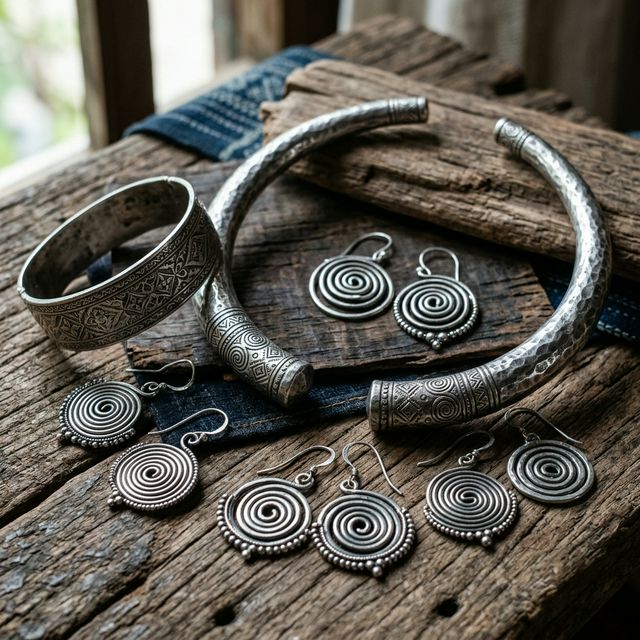
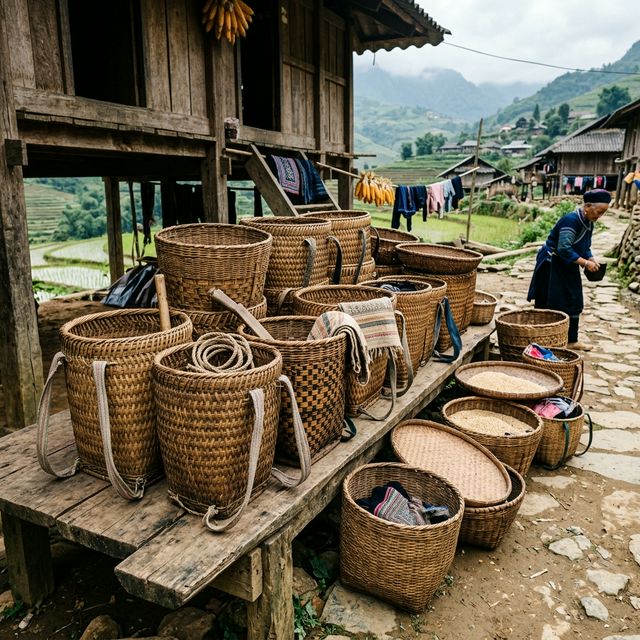
Split bamboo and rattan are used for the ubiquitous hottes (gùi). Rarer, the **khen** (Hmong mouth organ) is the sacred instrument for festivals and courtship rituals.
The **Hmong jaw harp** (đàn môi), made of a thin metal sliver, is a compact and enchanting souvenir.
Artisanally distilled by the Hmong. Each family has its own still and secret yeasts. Powerful and fragrant.
Harvested from century-old wild tea trees at high altitude. A woody and complex taste, hand-picked by women.
Honey from the Giáy of Tả Van is collected from hollowed wood hives. A pure product from high-altitude wild flowers.
The Sapa weekend market allows buying directly from artisans. For jewelry, favor village workshops in **Tả Phìn** for full traceability.
Structures like **Sapa O'Chau** or **Indigo Cat** guarantee fair prices and controlled quality, avoiding industrial resellers.
On the reverse side, handmade embroidery threads are irregular and knots are visible yet neat. Machines create cold mechanical regularity.
A magnet should not attract it. 925 silver is heavy and cold. Avoid prices too low for solid pieces in tourist streets.
Our guides take you to meet artisans in their villages. Organize a cultural immersion day and buy at the source.